AI Photo Editing: How Your Phone Changes Reality
Monday, 16 February, 2026253 words4 minutes
Contemporary smartphones employ sophisticated artificial intelligence to process every photograph, fundamentally transforming the relationship between captured images and objective reality. While these technologies produce aesthetically pleasing results, they raise profound questions about authenticity and memory.
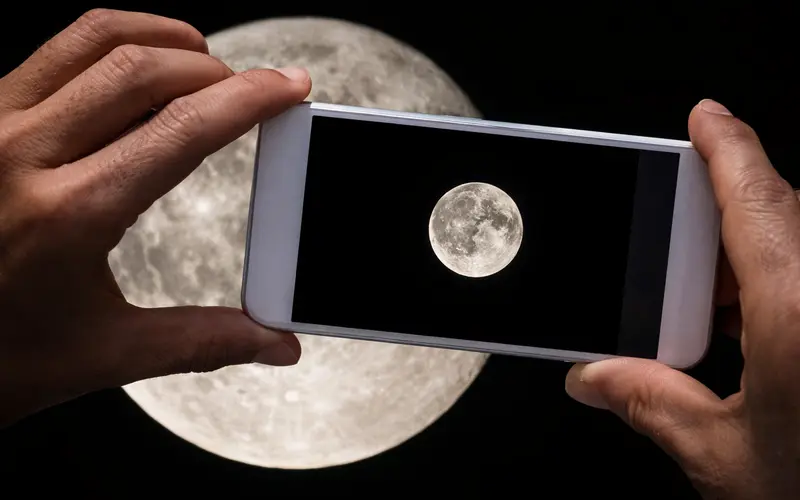
Samsung's controversial Moon photography feature exemplifies this phenomenon. A Reddit user demonstrated that when photographing a deliberately pixelated lunar image displayed on a computer screen, his Samsung device generated a remarkably clear photograph complete with craters and shadows absent from the source material. This "detail enhancing function" relies on AI trained to recognize and reconstruct the Moon based on existing data rather than actual optical information.
Computational photography has become ubiquitous across all smartphone platforms. Each camera activation triggers multiple exposures that are algorithmically merged, with AI performing trillions of operations before saving the final image. Technologies like Apple's Deep Fusion employ neural networks trained on millions of images to identify and process objects differently, modifying individual pixels based on learned patterns rather than captured light alone.
Manufacturers insist their objective is authentic photography, yet they inevitably make aesthetic and creative decisions that shape users' memories. Features like Google's Best Take synthesize optimal expressions from multiple group photographs, producing images of moments that never occurred. Asian market devices often include aggressive beauty filters that generate facial features through pure hallucination. While users can access raw, unprocessed images through specialized settings, the default experience represents a negotiation between reality and algorithmic interpretation. As Professor Lev Manovich observes, this represents something simultaneously continuous with and radically different from traditional photography.