Earth's Fight Against Encroaching Saltwater
Monday, 02 March, 2026228 words3 minutes
Saltwater intrusion represents a paradigm of slow-onset climate disasters that receive insufficient attention compared to dramatic weather events. This phenomenon occurs when saline water from oceans infiltrates freshwater aquifers, devastating coastal communities' drinking water supplies and agricultural productivity.
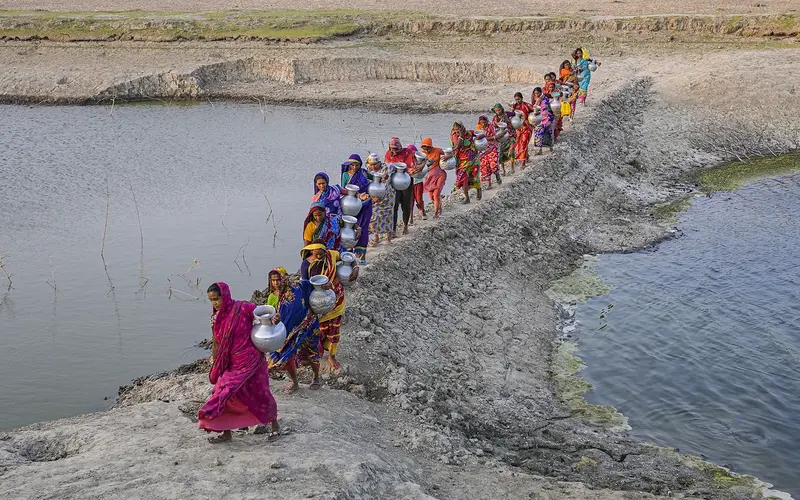
The crisis disproportionately affects low-lying nations. In The Gambia, where the eponymous river sits almost at sea level, saltwater now penetrates up to 250km inland. Nurse Senneh, a 59-year-old rice farmer from Sankandi, witnessed her one-hectare field succumb to this encroachment four years ago. Despite constructing makeshift dikes three times, she ultimately abandoned the land. The country has experienced a 42% reduction in rice cultivation areas between 2009 and 2023, threatening food security in a nation where 91% of the extremely poor are farmers.
Climate change exacerbates this crisis through multiple mechanisms: rising sea levels, decreased precipitation, and elevated temperatures. The Gambia's annual rainfall has declined 30% since the 1970s, while rising seas push saltwater further inland. Excessive groundwater extraction in developed nations like the US compounds the problem. By 2100, nearly 77% of global coastlines will be affected.
Engineering solutions exist but vary in effectiveness. Florida employs tide gates and wastewater injection to maintain freshwater levels. Vietnam has constructed multimillion-dollar sluice gates, though these have experienced operational failures. As researcher Lizzie Yarina notes, "there are no silver bullets, and what works in one place may not work in another."