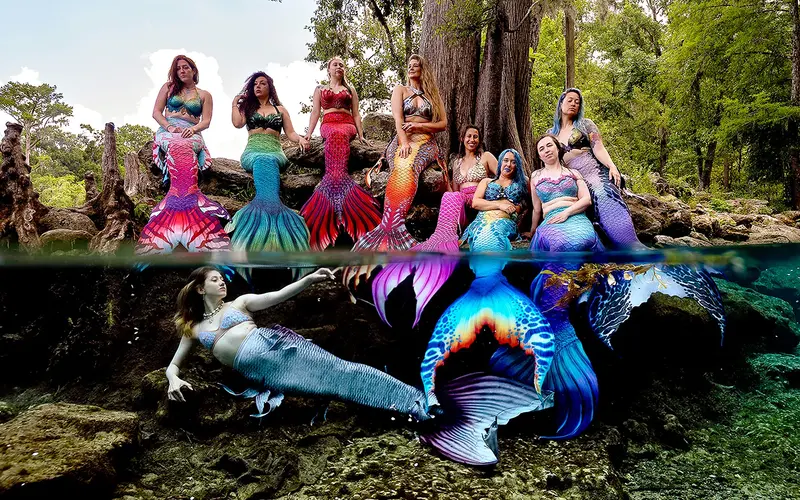
Swimming Like Mermaids Around the World
Tuesday, 03 March, 2026183 words3 minutes
As global tensions escalate, mermaiding has emerged as a captivating form of escapism. This practice involves swimming in natural water bodies and pools while wearing mermaid tails, and it represents one of 2026's fastest-growing travel trends in "romantasy" tourism.
The phenomenon has cultivated a body-positive and inclusive subculture, spreading across continents through conventions like MerMagic Con and PADI-certification courses. Florida's nearly 1,000 freshwater springs, with their year-round average temperature of 22°C, have established the state as the world's mermaid capital. The Maldives attracts enthusiasts with opportunities to glide through prismatic reefs alongside whale sharks and manta rays. Cornwall's rugged coastline offers a connection to medieval folklore, while California's Catalina Island provides encounters with seals in dense kelp forests.
The appeal transcends mere recreation. "For me, it's about getting in the water and escaping from life for a little bit," explains blogger James Barrett. From Taiwan's DiveCube facility with its 21-meter-deep pool to Mexico's Los Islotes where mermaids swim with playful sea lion colonies, these aquatic adventures offer participants a chance to nurture their inner mermaid while forging connections within a welcoming global community.