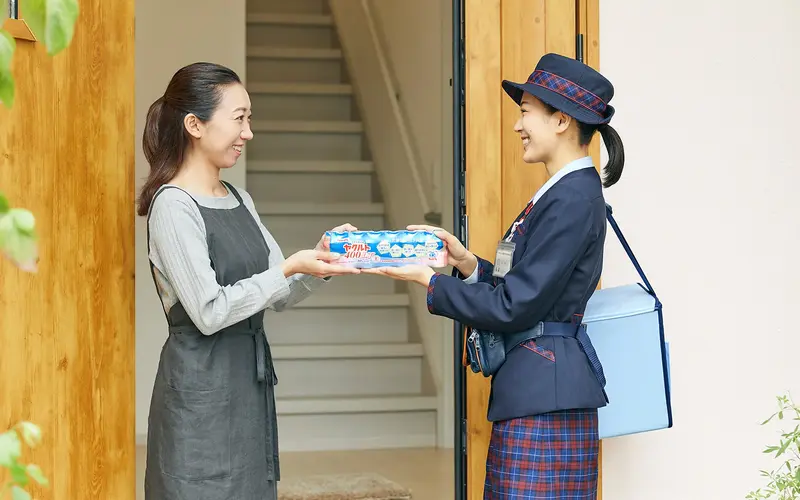
The Yoghurt Delivery Women Combatting Loneliness in Japan
Friday, 06 March, 2026236 words3 minutes
As Japan confronts one of the world's most rapidly ageing populations, an unlikely social infrastructure has emerged: Yakult Ladies. These uniformed women deliver fermented probiotic drinks, but their significance transcends commercial transactions. In a nation where nearly 30% of citizens exceed 65 years and kodokushi—"lonely death"—claims over 40,000 lives annually, these delivery workers have become vital threads in the social fabric.
The system originated pragmatically in 1963. Yakult's probiotic drink, developed by Dr. Minoru Shirota in 1930, initially struggled for acceptance. Labour shortages prompted local distributors to employ women from their communities, whose familiarity fostered trust. The strategy proved remarkably effective, and by 1971, daily sales reached 15 million bottles.
Today, Yakult Ladies like Satoko Furuhata embody a dual role. Beyond delivering products to 40-45 households daily, they provide consistent human contact. One 83-year-old customer describes Monday visits as her "energy charging day," noting that "even on days when I feel unwell, hearing her cheerful voice gives me strength." These interactions, sustained over decades, create routines that combat isolation.
The correlation between social connection and physical health extends to gut microbiome diversity, which research suggests diminishes with chronic loneliness and stress. While Yakult didn't design its network as a public health intervention, the convergence of probiotic delivery and social care has proven remarkably prescient. With over 31,000 Yakult Ladies in Japan and 50,000 internationally, this model demonstrates how commercial systems can inadvertently address profound social challenges.